
“May Allah Bless You in Arabic: True Meaning Revealed” is a simple yet meaningful phrase that carries deep spiritual value in Islam. It is not just a set of words but a sincere prayer asking Allah to grant someone goodness, mercy, and blessings in their life. Muslims use this phrase in daily conversations to express kindness, gratitude, and respect toward others. It helps create a strong bond of care and positivity through heartfelt duas.
This phrase also reminds us of the importance of wishing الخير (goodness) for others in every situation. It encourages spreading positivity, love, and peace through even the smallest words we say. A short dua like this can have a powerful impact and bring comfort to someone’s heart. Understanding its true meaning allows us to use it more sincerely and with a deeper sense of purpose.
Understanding the Meaning Behind “May Allah Bless You in Arabic”
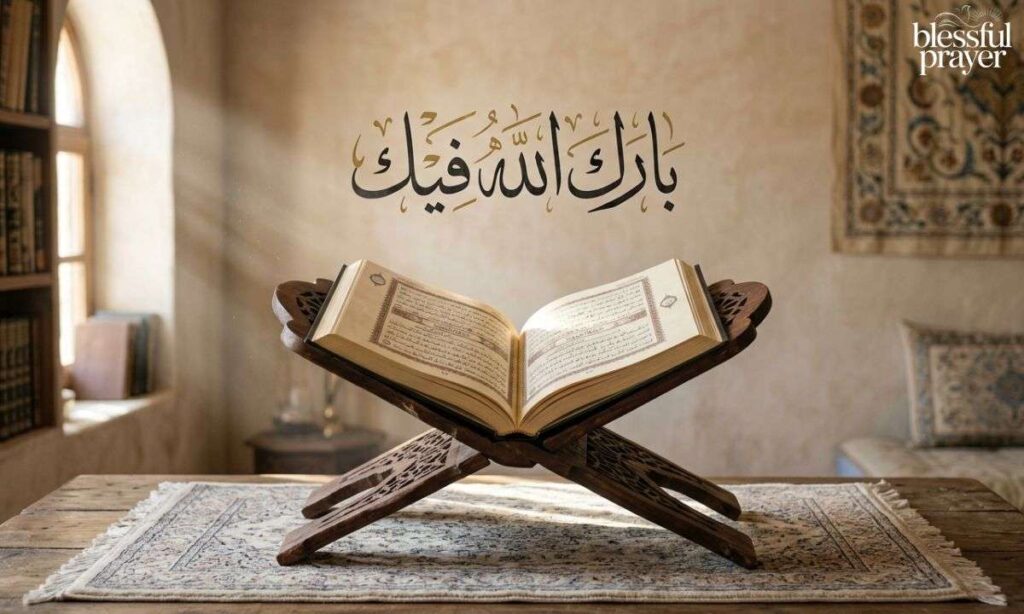
When Muslims say “May Allah bless you” in Arabic, they are offering more than just a polite phrase it is a heartfelt prayer directed toward another person’s well-being.
The most common expression is “Barakallahu feek” (بَارَكَ اللهُ فِيكَ), which literally translates to “May Allah place blessings in you.” This phrase carries deep spiritual weight rooted in the belief that all goodness flows from Allah alone.
Understanding its meaning opens a window into the rich tradition of Islamic supplication and the value Muslims place on wishing good for others.
The Power of Blessings in Arabic and Islamic Culture
In Islamic and Arabic culture, blessings are not merely social pleasantries they are acts of worship and spiritual connection.
The Arabic language itself is considered sacred, as it is the language of the Quran, and blessings spoken in it carry immense cultural and religious significance. Offering a blessing like “Barakallahu feek” is believed to invoke Allah’s mercy upon the recipient and strengthen the bond between individuals.
This culture of blessing one another reflects the Islamic principle that a believer’s well-being is tied to the well-being of the entire community.
What Does “May Allah Bless You” Mean in Islam
In Islam, saying “May Allah bless you” is an act of dua (supplication), meaning you are directly asking Allah to shower His grace upon someone.
The word “Barakah” (بركة) means divine blessing — a sacred energy that brings abundance, growth, and goodness into every aspect of life.
Muslims believe that when you sincerely pray for another person’s blessing, you yourself receive reward from Allah for that act of generosity. It is a reminder that true blessing comes from Allah alone, and expressing that is both an act of faith and kindness.
How to Say “God Bless You” in Arabic the Right Way
The most authentic and widely used phrase to say “God bless you” in Arabic is “Barakallahu feek” (بَارَكَ اللهُ فِيكَ) for a male and “Barakallahu feeki” (بَارَكَ اللهُ فِيكِ) for a female.
Another beautiful expression is “Jazakallahu Khayran” (جَزَاكَ اللهُ خَيْرًا), meaning “May Allah reward you with goodness,” often used to express gratitude. Pronouncing these phrases correctly and sincerely is important, as they are prayers and not just words.
Learning the right form and context ensures the blessing is delivered with proper meaning and respect.
The Deeper Meaning of “God Be With You” and “Bless You” in Arabic
The phrase “God be with you” in Arabic is often expressed as “Fi Amanillah” (فِي أَمَانِ اللهِ), meaning “In the protection of Allah.” This expression is typically said when parting from someone, conveying the hope that Allah’s safety and care will surround them on their journey.
Similarly, “Bless you” in the Islamic context means invoking Allah’s divine favor and protection upon a person’s life, health, and affairs. Together, these phrases reflect the deep Islamic belief that no one is truly safe or blessed except through Allah’s will and mercy.
The Spiritual Rewards of Blessing Others in Islam
Islam teaches that making dua for others is one of the most noble and rewarding acts a believer can perform.
The Prophet Muhammad ﷺ said that when you pray for your brother or sister in their absence, the angels say “Ameen, and the same for you” meaning you receive the same blessing you wished for them.
This beautiful reciprocity encourages Muslims to be generous with their prayers and actively seek good for others. Every time you say “Barakallahu feek”, you are planting a seed of spiritual reward that returns to you multiplied by Allah’s grace.
How Arabic Blessings Strengthen Faith and Community Bonds
Arabic blessings and duas are a powerful glue that binds the Muslim community together, fostering love, empathy, and brotherhood.
When Muslims regularly exchange blessings, it reinforces the Quranic concept of the Ummah, the global community of believers united by faith.
Phrases like “Barakallahu feek” remind both the giver and receiver that they are part of something larger than themselves, connected through shared belief in Allah. This constant exchange of blessings creates an atmosphere of positivity and spiritual awareness that uplifts the entire community.
How to Say “God Bless You” in Arabic the Right Way
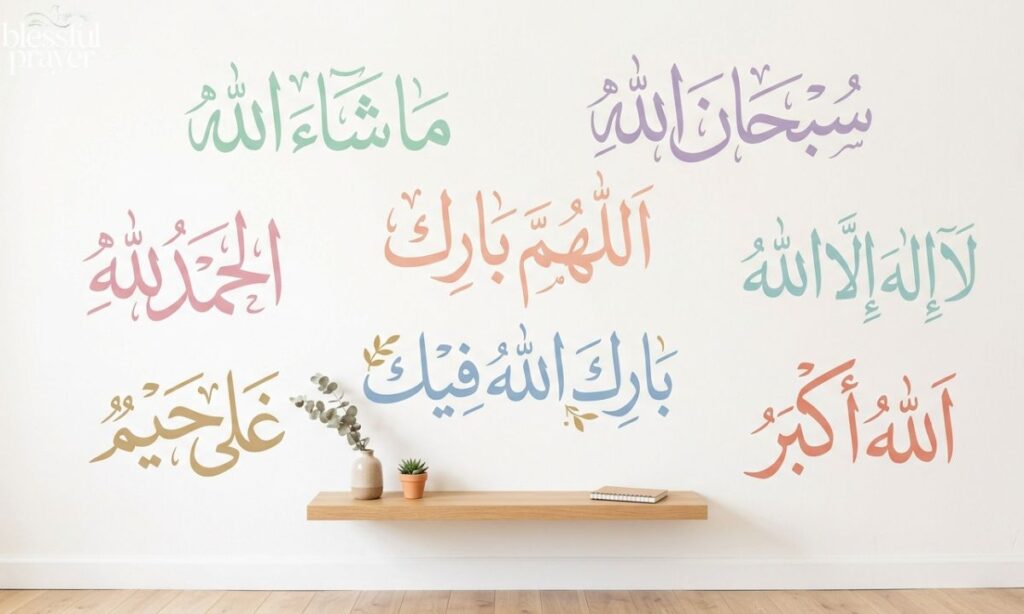
Saying “God bless you” correctly in Arabic requires understanding both the words and the intention behind them. The phrase “Barakallahu feel” is used in everyday conversations, whether thanking someone, congratulating them, or responding to a kind act.
It is important to say it with genuine sincerity, as in Islam, the heart’s intention greatly affects the value of any verbal expression. Practicing these phrases regularly especially with native speakers or in Islamic settings helps develop the proper pronunciation and the natural cultural habit of blessing others.
May Allah Bless You in Arabic Male
When addressing a male specifically, the phrase “Barakallahu feek” (بَارَكَ اللهُ فِيكَ) is the grammatically correct form used in classical and modern Arabic.
The ending “feek” (فِيكَ) is the masculine singular form, meaning “in you,” and it is the version most commonly heard in Islamic gatherings, mosques, and daily interactions. For a group of males or a mixed group, the form changes to “Barakallahu feekum” (بَارَكَ اللهُ فِيكُمْ).
Understanding these grammatical distinctions ensures that your blessings are not only spiritually sincere but also linguistically accurate and respectful of the Arabic language’s precision.
May Allah Bless You in Arabic Female
The most common way to say “May Allah bless you” to a female is “بَارَكَ ٱللّٰهُ فِيكِ (Barakallahu Feeki)”.The word “Feeki” is specifically used for a female, while “Feeka” is for a male.
“Baraka” means blessing, growth, and divine goodness, and “Allah” refers to God in Islam.
Together, the phrase is a heartfelt dua asking Allah to place goodness, success, and blessings in her life.
Muslims use “Barakallahu Feeki” to appreciate, thank, or pray for a woman in a respectful way.It can be said after receiving help, kind words, or as a general expression of goodwill and prayer.
DUA AND QUOTES: May Allah bless you in Arabic
- اللّهُمَّ بارِكْ لَكَ – May Allah bless you with goodness and increase.
- بارك الله فيك – May Allah put blessings in everything you do.
- اللّهُمَّ أَنْزِلْ عَلَيْكَ بَرَكَاتِكَ – May Allah send His blessings upon you.
- جَعَلَ اللهُ حَيَاتَكَ مُمْتَلِئَةً بِالْبَرَكَةِ – May Allah fill your life with blessings.
- اللّهُمَّ زِدْكَ خَيْرًا وَبَرَكَةً – May Allah increase you in goodness and blessings.
- بارك الله لك في عمرك – May Allah bless your life and your years.
- اللّهُمَّ اجْعَلْ بَرَكَتَكَ تَحِلُّ عَلَيْهِ – May Allah’s blessings rest upon you.
- بارك الله لك في رزقك – May Allah bless your sustenance.
- اللّهُمَّ احْفَظْكَ وَبَارِكْ فِيكَ – May Allah protect you and bless you.
- بارك الله في أيامك القادمة – May Allah bless your coming days.
- اللّهُمَّ اجْعَلْ كُلَّ خُطْوَةٍ لَكَ فِيهَا بَرَكَةٌ – May every step you take be blessed.
- بارك الله في أهلك ومالك – May Allah bless your family and wealth.
- اللّهُمَّ بَارِكْ لَكَ فِي كُلِّ أَمْرٍ – May Allah bless you in every matter.
- بارك الله في عملك وجهدك – May Allah bless your work and efforts.
- اللّهُمَّ اجْعَلْ بَرَكَةَ السَّمَاءِ عَلَيْكَ – May the blessings of the heavens be upon you.
- بارك الله لك في صحتك – May Allah bless your health.
- اللّهُمَّ أَضِئْ حَيَاتَكَ بِالْبَرَكَةِ – May Allah light your life with blessings.
- بارك الله لك في علمك – May Allah bless your knowledge.
- اللّهُمَّ اجْعَلْكَ مِنَ الْمُبَارَكِينَ – May Allah make you among the blessed.
- بارك الله لك في كل يوم جديد – May Allah bless every new day of your life.
- اللّهُمَّ اجْعَلْ بَرَكَةَ الأَرْضِ تَحْتَ قَدَمَيْكَ – May the blessings of the earth be under your feet.
- بارك الله لك في قراراتك – May Allah bless your decisions.
- اللّهُمَّ أَكْرِمْكَ بِبَرَكَاتٍ لَا تُعَدُّ – May Allah honor you with countless blessings.
- بارك الله لك في مستقبلك – May Allah bless your future.
- اللّهُمَّ اجْعَلْ بَرَكَتَكَ تُحِيطُ بِكَ مِنْ كُلِّ جَانِبٍ – May Allah’s blessings surround you from every side.
- بارك الله لك في أوقاتك – May Allah bless your time.
- اللّهُمَّ اجْعَلْ كُلَّ أَمْنِيَاتِكَ مُمْتَلِئَةً بِالْبَرَكَةِ – May all your wishes be filled with blessings.
- بارك الله لك في قلبك وروحك – May Allah bless your heart and soul.
- اللّهُمَّ اجْعَلْ بَرَكَةَ حَيَاتِكَ دَائِمَةً – May the blessings in your life be everlasting.
- بارك الله لك في كل لحظة من حياتك – May Allah bless every moment of your life.
May Allah bless you in Arabic
The phrase **”May Allah bless you”** in Arabic is **”بارك الله فيك” (Barakallahu Feek)**.
It is often used to express sincere prayers and gratitude for someone’s good deeds or kindness.
What do you say when you say may Allah reward you?
Muslims say **”جزاك الله خيراً” (Jazakallahu Khayran)** meaning *“May Allah reward you with goodness.”*
It’s a beautiful way to thank someone while invoking Allah’s blessings upon them.
How do Muslims greet one another?
Muslims greet each other by saying **”السلام عليكم” (As-salamu Alaikum)**, which means *“Peace be upon you.”*
The reply is **”وعليكم السلام” (Wa Alaikum Assalam)**, meaning *“And upon you be peace.”*
When a Muslim dies, what do they say?
When hearing of someone’s death, Muslims say **”إنا لله وإنا إليه راجعون” (Inna lillahi wa inna ilayhi raji’un).**
It means *“Indeed, we belong to Allah, and indeed to Him we shall return.”*
Arabic is one of the richest languages in the world when it comes to expressing blessings, goodwill, and divine well-wishes in everyday conversation.
Common Arabic Phrases for “God Bless You” and Their Meanings
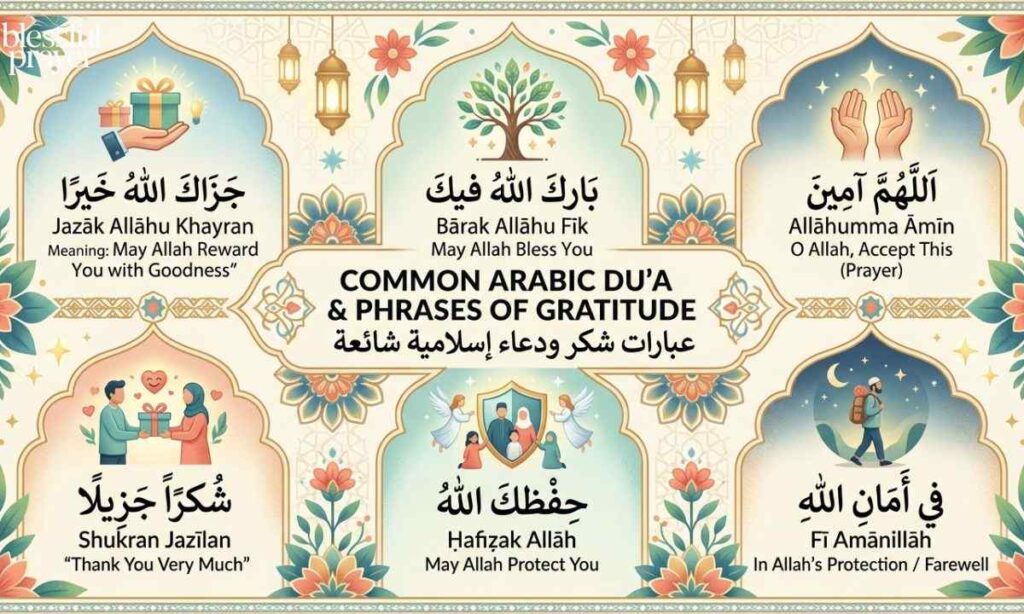
- Barakallahu feek (بَارَكَ اللهُ فِيكَ) means “May Allah bless you” and is one of the most widely used blessings in Arabic, typically said to express gratitude or appreciation toward someone.
- Jazakallahu Khayran (جَزَاكَ اللهُ خَيْرًا) translates to “May Allah reward you with goodness” and is commonly used as a deeply meaningful thank you in Muslim communities.
- Yarhamukallah (يَرْحَمُكَ اللهُ) means “May Allah have mercy on you” and is specifically said in response to a sneeze, similar to how English speakers say “bless you.”
- Allahu Yubarak Feek (اللهُ يُبَارِكُ فِيكَ) is a slightly varied form of blessing that carries the same meaning as Barakallahu feek and is widely used across Arab-speaking countries.
- Hafizakallah (حَفِظَكَ اللهُ) means “May Allah protect you” and is a blessing often given as a farewell or when wishing someone safety on a journey.
- Rahimakallah (رَحِمَكَ اللهُ) translates to “May Allah show you mercy” and is used to express deep compassion and goodwill toward another person.
- Waffaqakallah (وَفَّقَكَ اللهُ) means “May Allah grant you success” and is said to someone embarking on a new project, exam, or important endeavor.
- Aaanakallah (أَعَانَكَ اللهُ) means “May Allah help you” and is offered as a form of encouragement and support to those facing difficulties.
- Shafahallah (شَفَاهُ اللهُ) translates to “May Allah grant healing” and is used when someone is sick or recovering from illness, serving as a prayer for their recovery.
- Nasrakallah (نَصَرَكَ اللهُ) means “May Allah grant you victory” and is said to someone facing a challenge, competition, or struggle in their life.
Expressing Gratitude and Well-Wishes in Arabic
- Shukran Jazeelan (شُكْرًا جَزِيلًا) means “Thank you very much” and is one of the most common ways to express heartfelt gratitude in the Arabic language.
- Mutashakkir (مُتَشَكِّر) is a formal way to say “I am grateful” and conveys sincere appreciation, often used in formal or polite social settings.
- Yislamu (يِسْلَمُوا) is a Levantine Arabic expression meaning “bless your hands” and is typically said to someone who has cooked food or done something thoughtful for you.
- Tislam (تِسْلَم) means “be safe” or “bless you” in colloquial Arabic and is used across many Arab countries as a casual yet warm expression of goodwill.
- Mamnoonak (مَمْنُونَك) is a way to say “I am indebted to you” and expresses deep gratitude for a favor or act of kindness done by another person.
- Rabbena Yikrimak (رَبَّنَا يِكْرِمَك) means “May our Lord honor you” and is a generous blessing commonly heard in Egyptian Arabic during expressions of thanks.
- Allah Yikrimak (اللهُ يُكْرِمَك) translates to “May God honor you” and is a common response to a compliment or kind gesture, often exchanged in polite conversation.
- Takaramta (تَكَرَّمْت) is a polite way to say “you have been kind or generous” and is used to acknowledge someone’s goodwill or courtesy toward you.
- Allah Yusalmak (اللهُ يُسَلِّمَك) means “May God keep you safe” and is used both as a thank you and as a farewell blessing wishing someone peace and protection.
- Nawwart (نَوَّرْت) literally means “you have brought light” and is used as a warm expression to welcome someone into your home or acknowledge their kind presence.
When and How to Use “May Allah Bless You” in Conversations
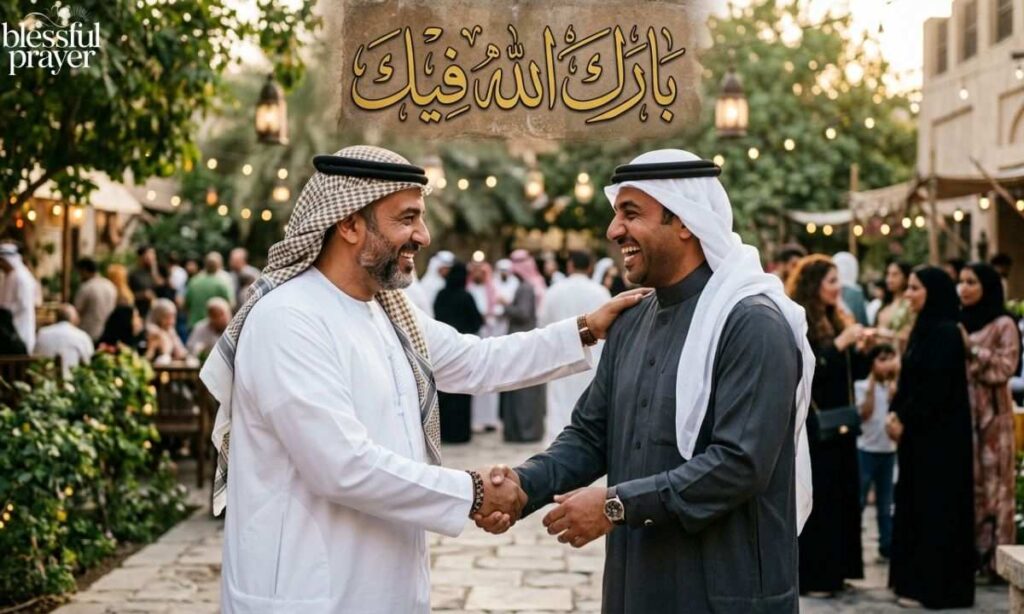
- After receiving help or a favor, saying Barakallahu feek is the most appropriate and respectful way to thank someone in Islamic Arabic culture for their time and effort.
- During greetings and farewells, phrases like Hafizakallah and Allah Yusalmak are naturally woven into everyday goodbyes to wish protection and peace upon the person leaving.
- When someone sneezes, the proper response in Islamic tradition is Yarhamukallah, meaning “may Allah have mercy on you,” which the sneezing person acknowledges with a specific reply.
- Before an exam or important event, friends and family use Waffaqakallah to wish success and divine guidance upon the person facing a significant challenge or opportunity.
- When visiting a sick person, Shafahallah is the appropriate blessing to say, serving as both a prayer for recovery and a gesture of emotional support and care.
- In response to a compliment, Allah Yikrimak is typically said to graciously receive kind words while redirecting the praise to God’s generosity rather than personal pride.
- At the start of a new business or project, Barakallahu feek and similar blessings are exchanged among partners and well-wishers to invoke divine support and prosperity.
- During religious occasions like Eid or Ramadan, blessings are exchanged abundantly, and phrases like Barakallahu feekum are said to groups of people to share collective goodwill.
- When someone does charitable work, the community responds with Jazakallahu Khayran to acknowledge that the reward for such deeds rightly belongs to God’s judgment and reward.
- In written correspondence, such as emails or messages, Arabic speakers frequently include blessings at the beginning and end of their texts to maintain a tone of respect and warmth.
Mastering these Arabic blessings not only enriches your language skills but also deepens your connection with Arabic-speaking cultures, their values of hospitality, faith, and heartfelt human connection.
Frequently Asked Questions
What does “May Allah Bless You” mean in Arabic?
It means asking Allah to give someone goodness, mercy, and barakah in their life.
How do you say “May Allah bless you” to a female?
You say “Barakallahu Feeki (بَارَكَ ٱللّٰهُ فِيكِ)” when addressing a woman.
What is the difference between “Feeki” and “Feeka”?
Feeki is used for females, while Feeka is used for males in Arabic.
When should you say “Barakallahu Feeki”?
It is said to thank, appreciate, or make a dua for a woman after kindness or help.
Is “Barakallahu Feeki” a dua or greeting?
It is mainly a dua (prayer), but it can also be used like a polite response.
Can non-Arabic speakers use this phrase?
Yes, Muslims worldwide use it even if Arabic is not their first language.
What is the reply to “Barakallahu Feeki”?
A common reply is “Wa Feeki Barakallah”, meaning “May Allah bless you too.”
Is this phrase mentioned in the Quran?
The exact phrase is not in the Quran, but the concept of blessings (barakah) is widely mentioned.
Can it be used in messages and social media?
Yes, it is often shared in texts, captions, and prayers online.
Why is this phrase important in Islam?
It spreads kindness, gratitude, and reminds people to make dua for others.
Conclusion
May Allah bless you is more than just simple words we say to others. It is a heartfelt dua filled with kindness, care, and sincerity. In Arabic, this phrase carries a deeper spiritual meaning that reflects love and faith. It reminds us to always wish goodness, mercy, and happiness for those around us.
Using this beautiful phrase helps build stronger connections between people and brings hearts closer. It spreads peace, positivity, and goodwill in everyday life. Even small words like this can give comfort and hope to someone. May Allah accept every sincere blessing we share and fill our lives with His mercy.

Howdy is a passionate content writer with 4 years of experience working with US-based clients. He specializes in blessing and prayer blogs, creating meaningful and engaging content. Currently, he is contributing his expertise to blessfulprayer.com, inspiring readers through faith-filled writing.